Studienteilnahme möglich,Study in the planning stage
Zuletzt aktualisiert am 3. November 2026
The study investigates changes in hormone production following (stereotactic) radiotherapy of pituitary and adrenal tumors. It focuses on normalization of hormone overproduction and potential delayed hormone deficiencies, aiming to better predict their timing and progression and identify when hormone replacement therapy may be required.
Informationen zur Studie
Previous studies have described hormonal changes after stereotactic radiotherapy, but systematic prospective data on their long-term progression are still lacking. In particular, it remains unclear when hormone levels normalize, how long hormonal overproduction persists, and whether delayed hormone deficiencies may develop.
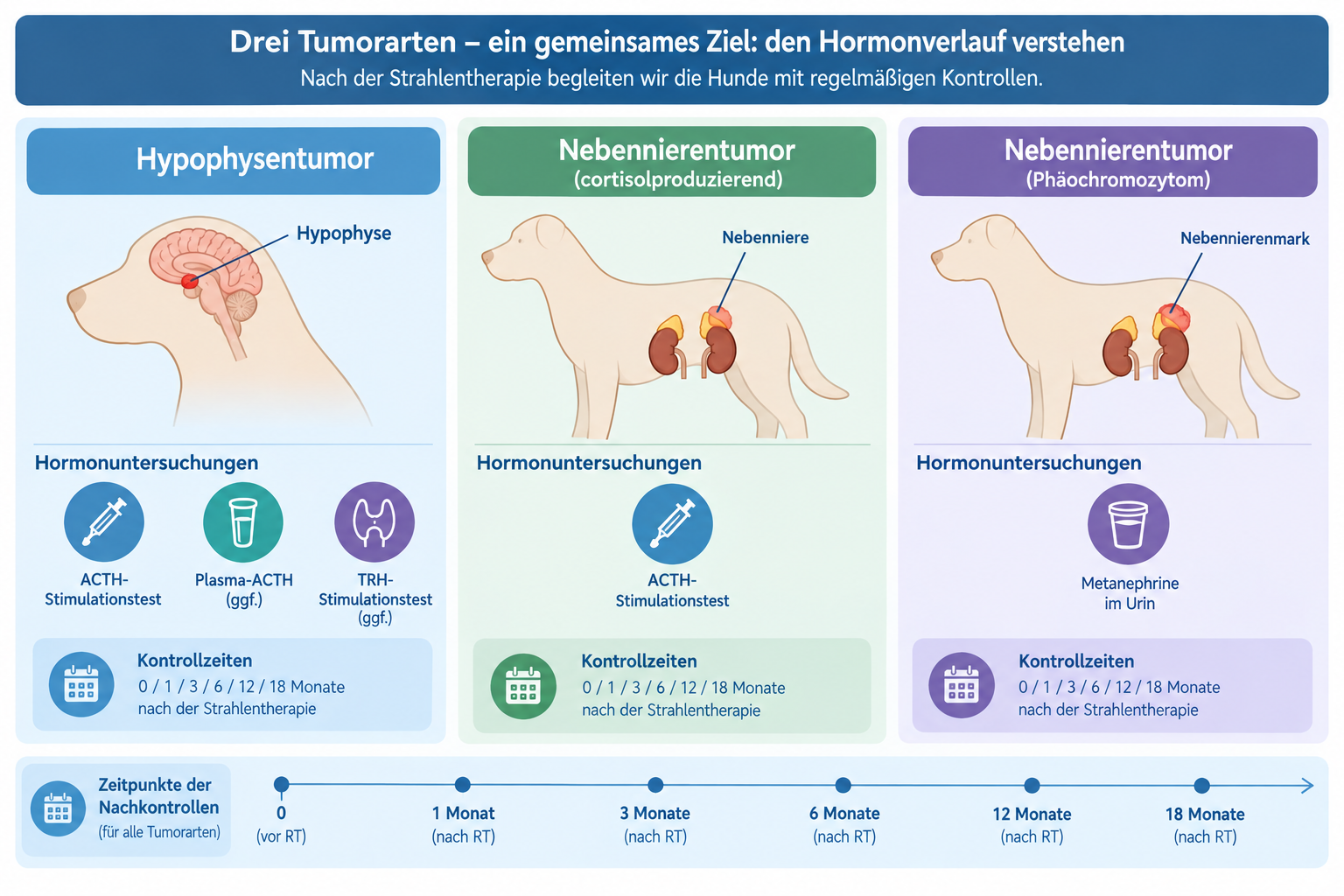
This prospective, longitudinal observational study aims to characterize these hormonal changes over time in dogs undergoing stereotactic radiotherapy as part of their planned treatment. Dogs will undergo standardized follow-up examinations at predefined time points. The minimally invasive assessments will primarily involve blood and urine sampling. Depending on the tumor type, different hormonal tests will be performed, including ACTH stimulation tests and plasma ACTH measurements in dogs with pituitary or adrenal cortical disease, and urinary metanephrine measurements in dogs with pheochromocytoma.
Hormonal results will be evaluated alongside clinical signs, quality of life, and survival, allowing individual hormonal trajectories to be assessed and their clinical relevance to be determined.
Vorteile
Dogs with pituitary or adrenal tumors that are treated with radiotherapy.
Hintergrundinformationen
Why is this study being conducted?
The study aims to investigate how hormone production changes in dogs after stereotactic radiotherapy and whether hormonal patterns differ between pituitary and adrenal tumors. A particular focus is on when excessive hormone production normalizes and whether delayed hormone deficiencies may develop over time.
As not all dogs will follow the same course, the researchers aim to identify typical patterns and time points of hormonal changes. The results may help determine appropriate follow-up intervals and guide medical treatment when necessary.
This is particularly important for the affected dogs, as hormonal changes can be detected and treated at an early stage. Possible hormone deficiencies can be recognized promptly and managed with appropriate replacement therapy. At the same time, persistent hormone overproduction can be assessed more accurately. By combining hormone measurements with clinical signs, quality of life, and disease progression, the study aims to distinguish laboratory changes that are clinically relevant from those that have little impact on the dog. Ultimately, the findings should support more individualized and effective follow-up care after radiotherapy.
Was ist das Ziel?
The aim of the study is to better understand how endocrine function develops over time following stereotactic radiotherapy. The findings should help establish appropriate follow-up intervals, identify relevant hormonal changes at an early stage, and guide targeted adjustments to medical treatment. Ultimately, the study aims to improve the long-term health and quality of life of affected dogs.
Was passiert bei der Studie?
Dogs receiving stereotactic radiotherapy as part of their planned treatment will undergo standardized follow-up examinations at predefined time points. The additional procedures are minimally invasive and mainly involve blood and urine sampling.
Depending on the tumor type, different hormone tests will be performed. These may include ACTH stimulation tests and plasma ACTH measurements in dogs with pituitary or adrenal cortical disease, or urinary metanephrine measurements in dogs with pheochromocytoma.
The results will be compared over time within each dog and between dogs to better understand individual hormonal changes following radiotherapy.
The study is being carried out in close collaboration between the Endocrinology Service, the Clinical Laboratory and the Clinic for Radiation Oncology & Medical Oncology.
Note: Image generated with "[grafische Darstellung für die Kontrolluntersuchungen bei den 3 Tumortypen]" by OpenAI, ChatGPT (DALL-E), 2026
Kontakt
For questions and enrolment, please contact us via the contact form.